
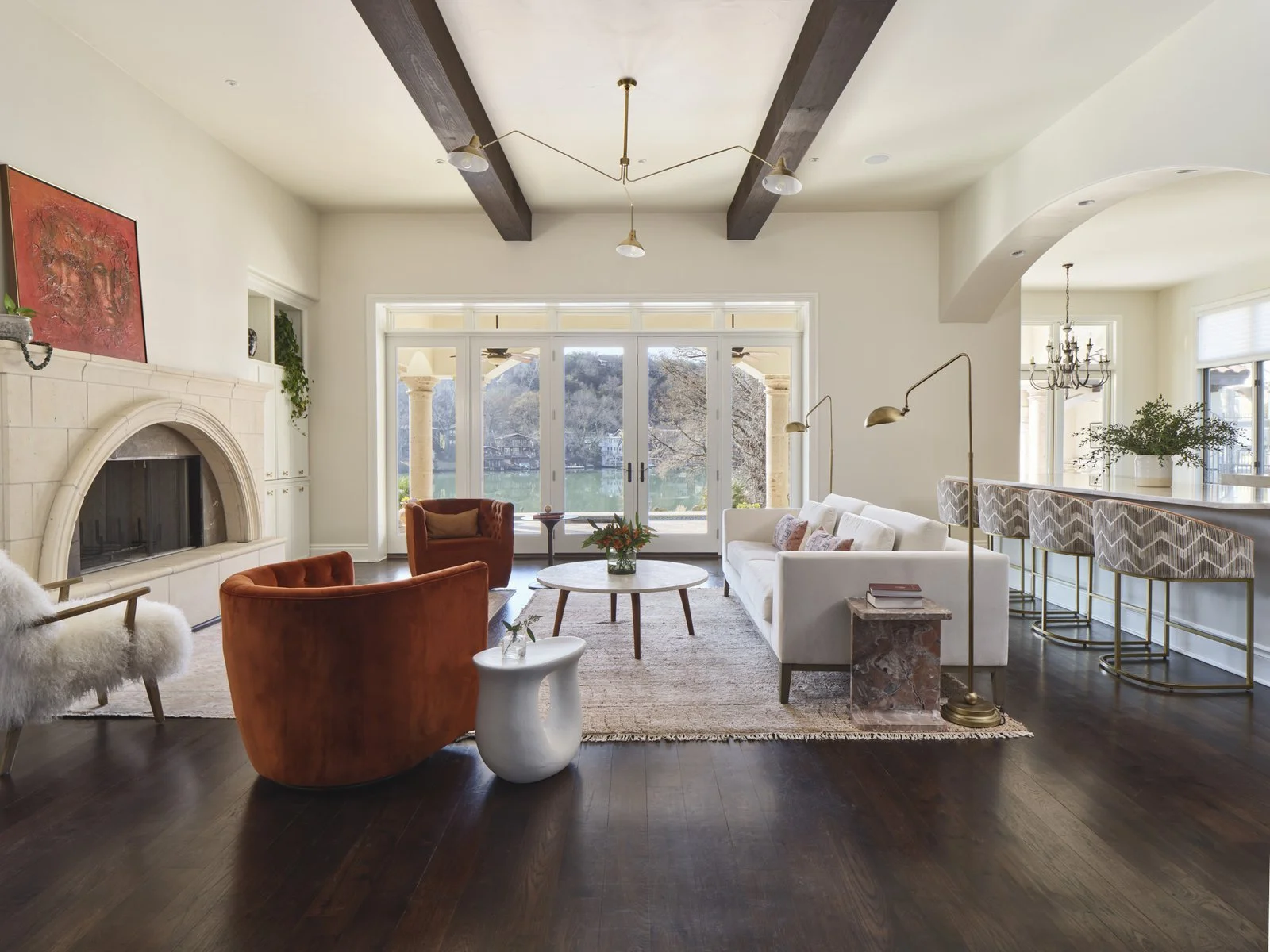
Homeowners typically come to us with good instincts and a clear sense for how their home isn't working for them. What they lack is the technical skill and time required to learn and make several hundred decisions, coordinate each one with a contractor and see every piece through to completion – sometimes remotely. That attention to detail, thorough coordination and tenacious follow through lies at the heart of an integrated, full-service design practice. It makes up 70% of the effort and is the part most people never see from the outside.
When Hill Country homeowners call us, many aren't sure exactly what they would be paying a designer to do. That's a fair question, and the answer depends a great deal on the kind of help you hire.
What to Know Before You Hire: A full-service interior designer handles the layout, lighting plan, built-ins and specification of every finish and fixture, then manages ordering, delivery, installation and coordination with your contractor. In Wimberley, the right designer also confirms whether the City of Wimberley or Hays County governs your lot, accounts for septic systems sized to bedroom count, plans around longer travel for trades and deliveries, and tests finishes in Hill Country light.
What is the difference between a decorator, a showroom designer and a full-service interior designer?
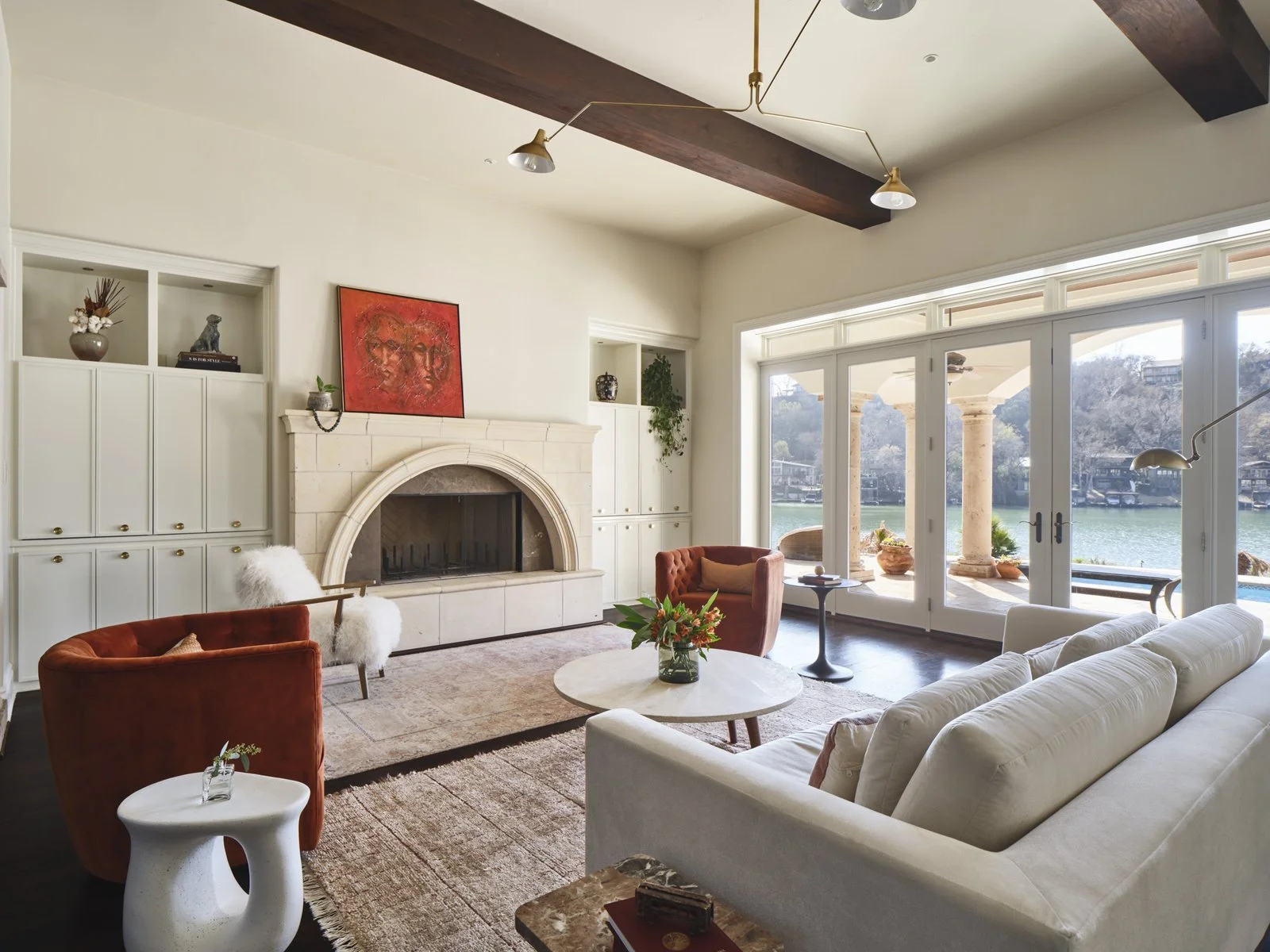
Most Hill Country homeowners are weighing three kinds of help, and each suits a different kind of project.
Does the phrase, "You should talk to so and so; they have an eye for design!" ring a bell? This is a decorator. They have taste and can make the most of what's already in your home, often rearranging furniture and supplementing with decor items, but they often lack the technical expertise to safely get involved with moving walls, planning lighting, or coordinating any construction. If your home needs to feel fresh, a good decorator may be the right fit.
On the other end of the spectrum, a showroom or retail designer is often free, or their fees are rolled into the purchase price of the products they recommend, and many are talented. They sell from the products their showroom sells, and are by nature, incentivized to sell. Their role in the project usually ends once the order is placed, and unless their showroom sells architectural lighting, paint or wallcovering, they are only focused on the furnishings.
A full-service interior designer begins every project with a careful assessment of your needs and goals before proposing edits to non-load-bearing interior walls, improving a lighting plan, designing custom built-ins, or specifying every fixture and finish that will leave your home transformed. In addition to being a trusted advisor and guide through the design process, a full-service designer will stay involved through construction, to answer the calls from your contractor and to make sure the decisions you invested in are realized. They order, track, and dictate placement of every element in your project, often from trade-only vendors – from the floor tile to the family portrait on the shelf. You have one team responsible for the whole picture, ensuring quality and the protection of your budget.
It's important to understand the training behind the advice you're paying for. In Texas, anyone can use the "interior designer" moniker and offer interior design services. However, the state reserves the title Registered Interior Designer for those designers who have qualifying education, have logged prescribed hours of professional experience, have passed the NCIDQ exam, and who participate in mandated levels of continuing education in order to retain their registered status. To be clear, there are plenty of gifted designers who aren't registered, but those who are do so because they support their profession and the ideals the name represents.
It's also worth knowing that in Texas, an interior designer cannot alter load-bearing walls or expand a home's footprint without employing an architect, registered building designer, or structural engineer to seal the drawings required to obtain a building permit.
This is where Page Paul's integrated practice stands apart. Solutions that include new construction, additions, revisions to load-bearing walls and other expansions of your home are documented and coordinated by our singular in-house team, the same team who performs all of the interior designer tasks outlined above. We analyze, design, select, draft, seal, procure and support your project from the first site walk to the placement of the throw pillows.
What does full-service interior design include?
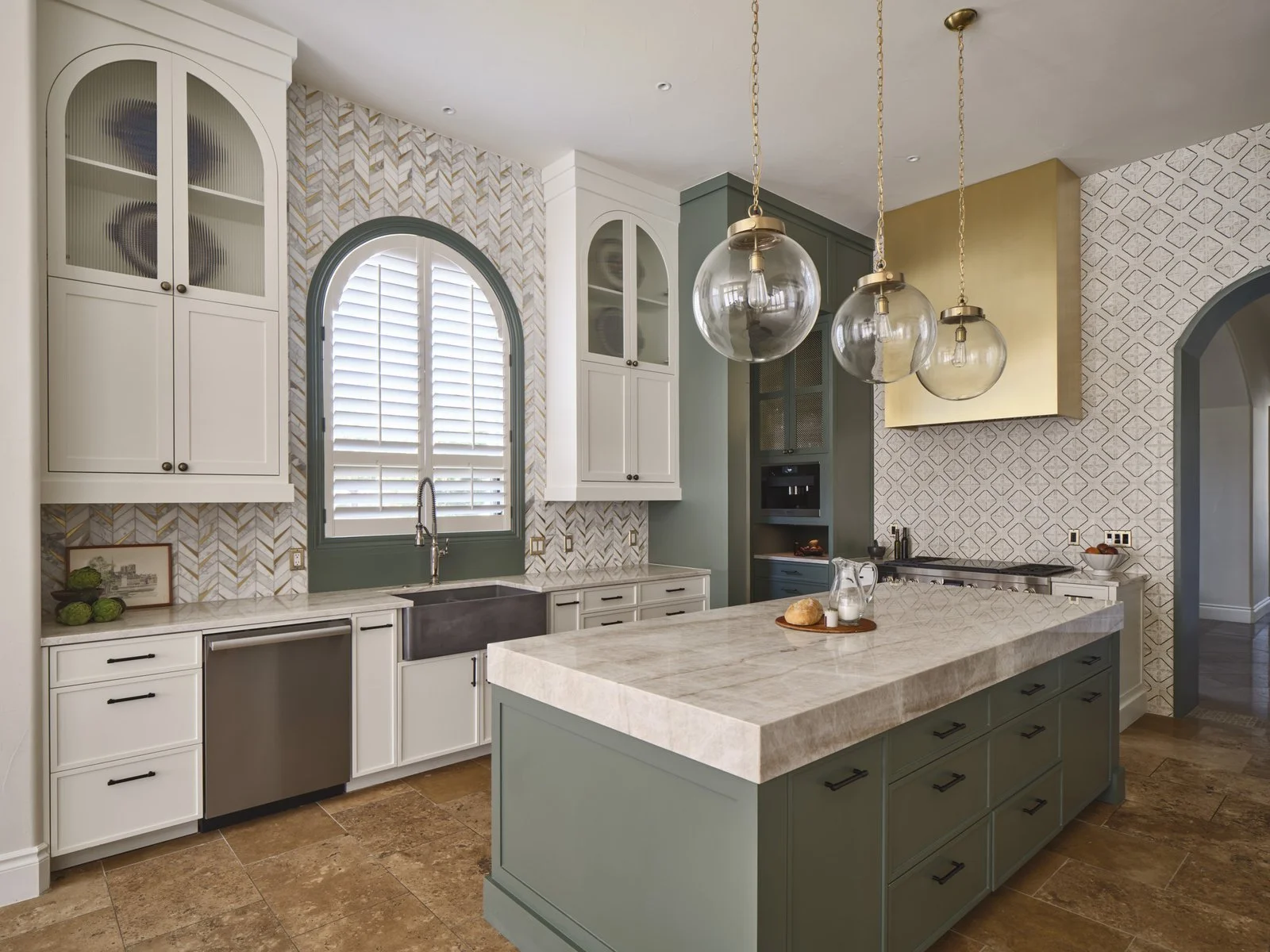
Every firm structures the work a little differently, but a full-service proposal should cover each of the following phases in some capacity. Here's how our process unfolds.
Discovery and a site visit
We begin with a call or a visit to your property. I want to see the house, though mostly I want to hear how you live in it, including who is up first in the morning, where the dogs sleep and which room you avoid, or love, and why. From there, we outline exactly how we'd work together to achieve your goals.
Space planning and concept
By now, your home and any heirlooms have been measured and factored into solutions that satisfy your objectives. We meet and walk you through the proposed changes to your home's layout (the plans). We test fit furniture and analyze how you walk through your home, making sure everything fits and flows. Alongside the plans, we prepare palettes that explore the design direction. A floor plan is, after all, just lines on a page. The design palette describes how a room feels. Is it flooded with light, snug and worn in, or clinically crisp? The design palettes often include reference imagery, materials, and colors, and this helps ensure that we're speaking the same language and in agreement before moving forward into more design detail.
Design development and selections
This phase is where the decisions compound and build upon each other, and things can start to feel overwhelming if you're attempting a DIY approach. From tile and stone to plumbing fixtures, lighting, cabinet hardware, millwork, and paint, we narrow down the myriad options to those that best suit your lifestyle, budget, and design palette. We provide physical samples so you aren't relying on opinions and adjectives. Every choice becomes a written specification with the model number, finish, size and quantity coordinated and readily available to the construction team. When the plumber asks the contractor for the kitchen faucet, it's already on paper – no guessing.
Documentation for the contractor
We include renderings in our drawing sets so the construction team grasps the look and feel of the project they're working on, but they need more than pretty pictures and mood boards to price and build from. Our drawing sets include interior elevations that show each wall's cabinetry and tile, lighting plans and electrical plans locating all fixtures and switches and describe which light(s) each switch controls. We detail how the wall base trim terminates at the toe kick, and having clear documents means fewer questions on site and fewer change orders. Change orders are requests for additional money (or time) for items that weren't accounted for in the pricing exercise and are considered the leading cause of blown budgets, project delays, project fatigue, hurt feelings and heartburn.
Procurement
In the trade, furniture, fixtures and equipment are referred to as FF&E. Procurement is the act of ordering, tracking, receiving, inspecting, and labeling each piece that arrives as well as resolving anything that arrives damaged. It's admittedly the least glamorous part of the job, and it's often the one our clients thank us for most. As one of our clients put it, "Page Paul was instrumental in procurement and coordination throughout construction. They worked closely alongside our contractor to ensure every selected finish, fixture, and detail was carried through exactly as intended." That kitchen faucet shows up on site with a label matching the drawings. No one is guessing if the bar faucet is the kitchen faucet.[TFG2]
Construction coordination
During construction, we answer the contractor's questions, visit the site and catch issues while they are still small. An outlet in the wrong place costs virtually nothing to move before it's wired but exponentially more once the drywall and paint are done. Being an extra set of eyes on site always yields a better end result.
Installation and styling
This is truly our favorite day of any project, because it's when everything comes together. Furniture is placed, art is hung, lights are aimed, beds are made, lamps are turned on and candles are lit. You walk into a finished home rather than a stack of boxes.
What makes interior design in Wimberley different from Austin?
Designing a home in Wimberley differs from designing one in Travis Heights in two practical ways, and a full-service team should plan for both from the start.
Being outside of the Austin metro area means everything travels farther. Deliveries, installers, stone fabricators and inspectors often come from Austin, and a designer who manages the calendar can group site visits and deliveries so no one makes the drive twice. That matters even more for homeowners who split their time between Wimberley and another city and can't be on site every week.
The light is different, too. Hill Country homes tend to have large windows, strong western sun and limestone and cedar just outside. A warm white that looks soft on a north wall can turn yellow on a west wall at 4 p.m., so paint and finish samples should be tested on site at different times of day before anything is ordered.
How do interior designers charge, and what should you ask before hiring one?
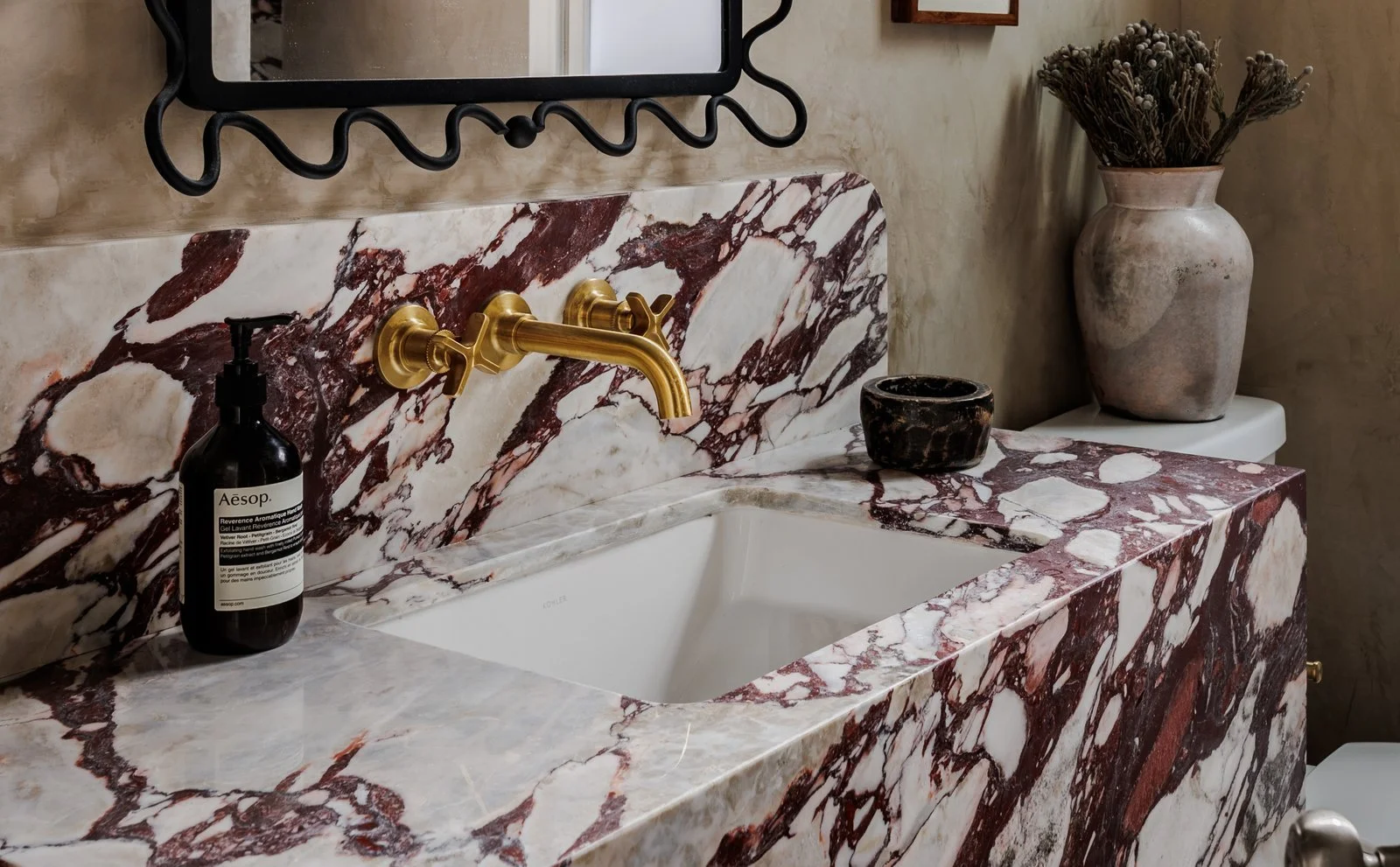
Designers charge in a few common ways. Some charge a flat fee for each phase, some bill hourly, some charge a percentage of the construction or furnishings cost, and many use a combination. No single model is better than the others. What protects you is understanding what is included and how product pricing works before you begin.
These are the questions I encourage homeowners to ask any designer they interview:
• Which of the phases above are included in your proposal, and which would be billed separately?
• Who places and tracks orders, and how are trade discounts or markups handled?
• How often will you be on site during construction, and who answers the contractor's questions day to day?
• Are you registered or licensed, and if the project involves walls, lighting or additions, who on your team handles that work?
• Could I see a finish schedule or specification sheet from a past project?
A designer who answers these clearly and without hesitation usually runs a clear process. You can see the range of homes we've designed, including full interiors and furnishings projects such as Big View and Viola, in our residential portfolio. If you're also thinking about outdoor living, our guide to pool shade structures covers how to plan shade that fits the house.
Has your Hill Country home reached its potential?
With a full-service designer, the hundreds of questions that go into a quality project are fielded by someone whose job it is to answer them and stay abreast of the project communications. You still make every decision that matters to you, while the coordination, ordering and follow-through are handled for you. The result is a home designed precisely around the way you live, where the morning light finds your favorite chair and every detail, from the hardware to the woodwork, supports the life you want to live.
If you're planning a renovation or new home in Wimberley or anywhere in the Hill Country, we'd be glad to walk the property with you. If you're only curious about what a project might involve, reach out anyway, because we always enjoy talking design. You can read more about our team on our About page.
Frequently Asked Questions
Do I need an interior designer if I already have a contractor?
A contractor's expertise lies in the management of the project schedule and the team, and in the methods used on site, not in the aesthetic decisions. An interior designer is focused on the look and feel of the finished project and they provide the detailed drawings and specifications required to build from. The two work best side by side, with all design questions directed to the designer. Without a designer keeping a big-picture view of your project, decisions made on the fly can cause coordination issues and unexpected results or 'design emergencies' that require homeowner input, stress and often additional financial input to resolve.
Can an Austin-based designer take on a project in Wimberley?
Yes. Page Paul is based in Austin and designs projects well beyond the city. On a Hill Country project, the key is planning site visits around construction milestones and coordinating deliveries and installers so every site trip is maximized.
What is a Registered Interior Designer in Texas?
A Registered Interior Designer is registered with the Texas Board of Architectural Examiners, which requires passing the NCIDQ exam along with education and experience requirements. Texas protects the title rather than the practice, so anyone may call themselves an interior designer, but only registered designers may use the title Registered Interior Designer.
Are permits required? If so, which ones?
The short answer is most likely yes, a permit will be required. However, who issues your permits depends on where your lot sits. Inside city limits, construction permits go through the City of Wimberley and are required for new construction as well as remodels, alterations and additions including accessory structures like sheds and ADUs. Outside city limits, Hays County requires a development permit for any kind of development, including houses, additions, pools, outbuildings, grading and creek crossings. Confirming which rules apply comes before any design work.
Lots outside city limits are also likely required to handle sewage with an on-site facility, aka a septic system. Residential septic systems in Hays County are designed based on both the size and the number of bedrooms, and making changes to either of those numbers can mean required changes to your septic system. Having architectural training on the interiors side means issues like this surface during the planning stage rather than after pretty pictures are generated and permit applications are filed.
Ready to talk about your Hill Country home? Get in touch through our contact form and we'll set up a time to see the property.